Earlier this month, I traveled to Hilo, Hawai'i to see the Water Guardians (or "Yellow Submarines") in action. Thanks to our years-long collaboration with Dr. Pascale Pinner, this was the latest of multiple trips GaiaXus has made to the island — but it was my (Caroline's) first visit! I'm deeply grateful to Dr. Pinner, Kumu Ka'imi, and Kumu Pohai for being so welcoming.
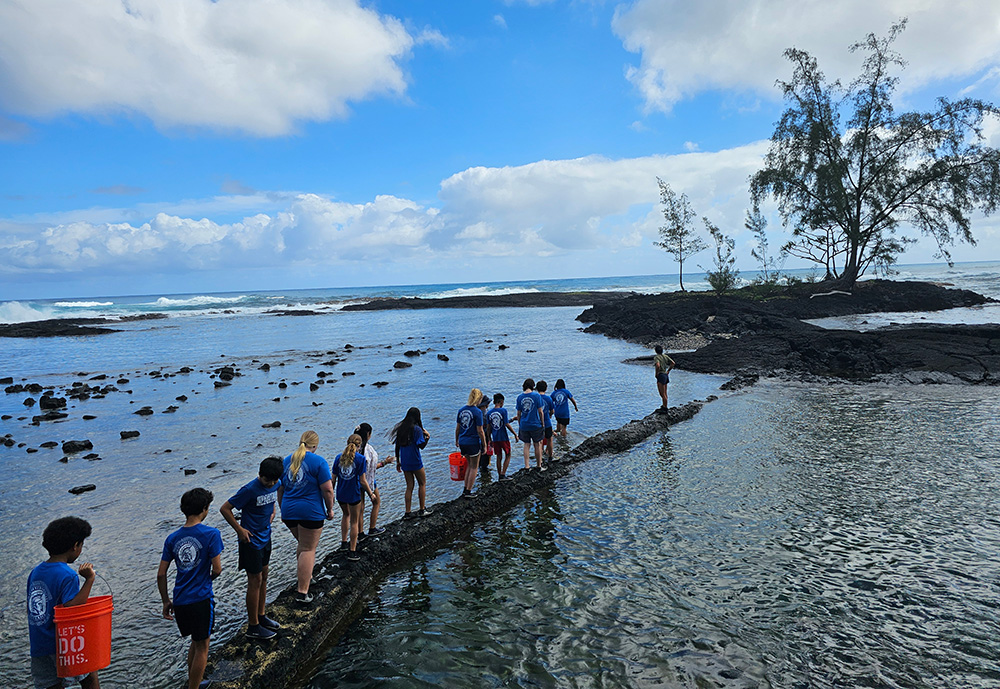
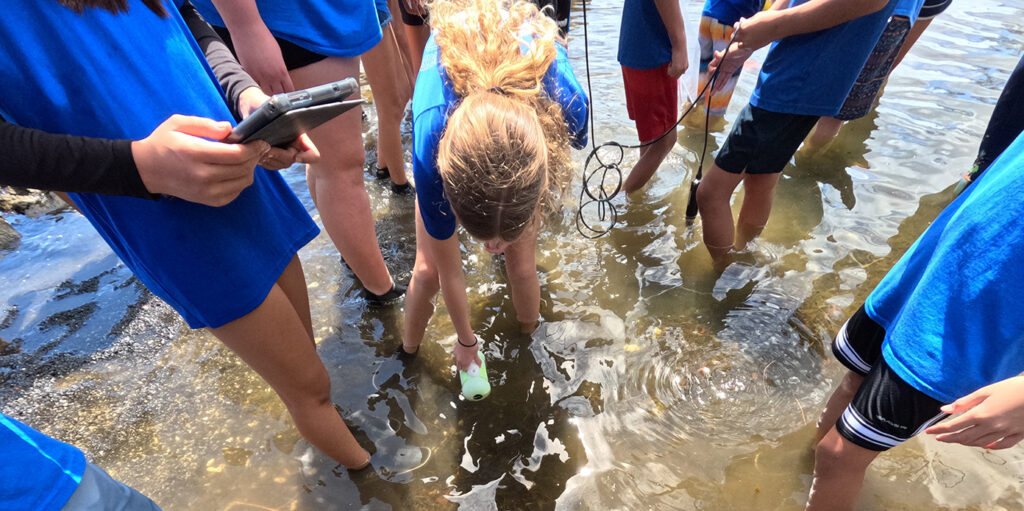
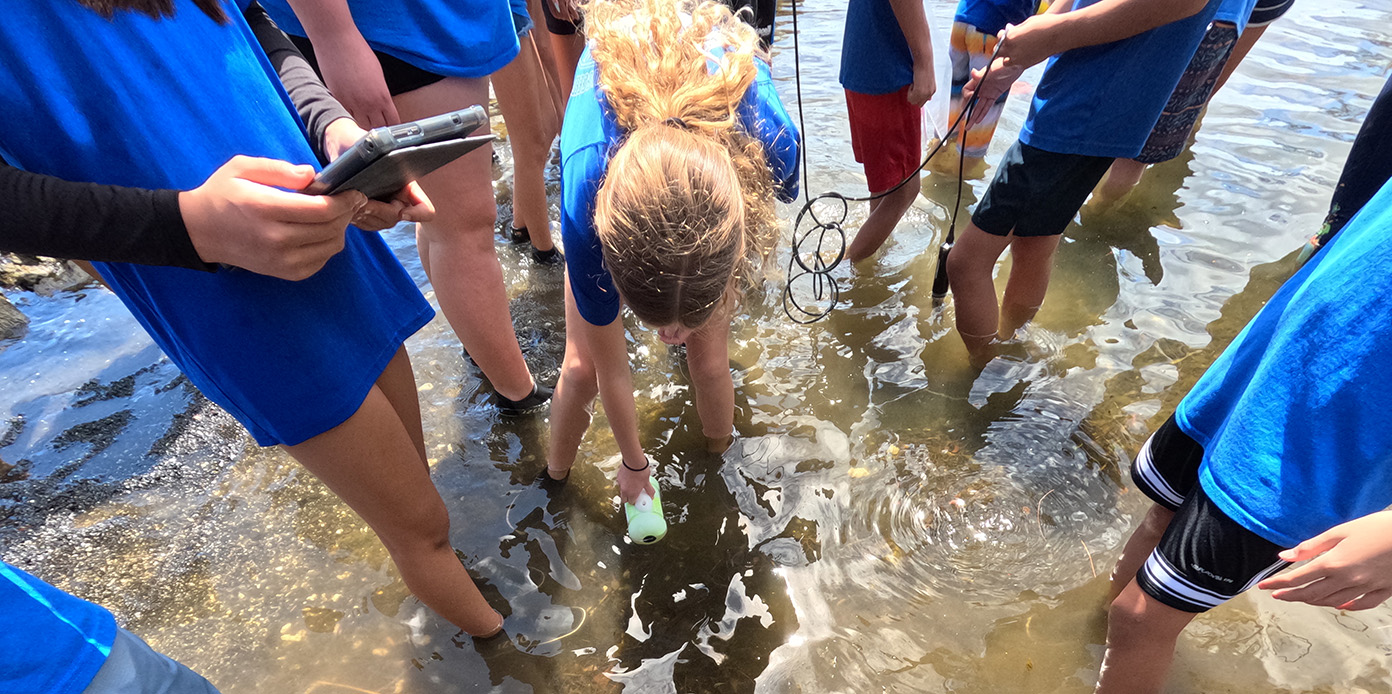
I had the joy of accompanying Hilo Intermediate School on their field trip to the Kumuola Marine Science Education Center, where students compared digital and analog instruments to sample five locations from the bay to the fish pond. With the sensors, we could see the salinity change from oceanic concentrations closer to the bay to nearly zero by the mākāha, or the fish pond's gate. All of this was within walking distance! You can even see the data in our online map.
At the end of the field trip, the Kumuola staff led a great conversation on accuracy and precision, and the quality of data produced by different instruments. We are grateful to the Kumuola staff for incorporating the Water Guardians into their lesson plan for the field trip.
The Kumuola field trip was the first time our Lab and Project platform accompanied our sensors in the field — exactly where our tools are meant to be used. At GaiaXus, we are all about place-based learning and delivering teachable moments that are meaningfuly, memorable, messy, and fun! The field trip was a blast to be a part of and an incredible example of how the GaiaXus system can be used.
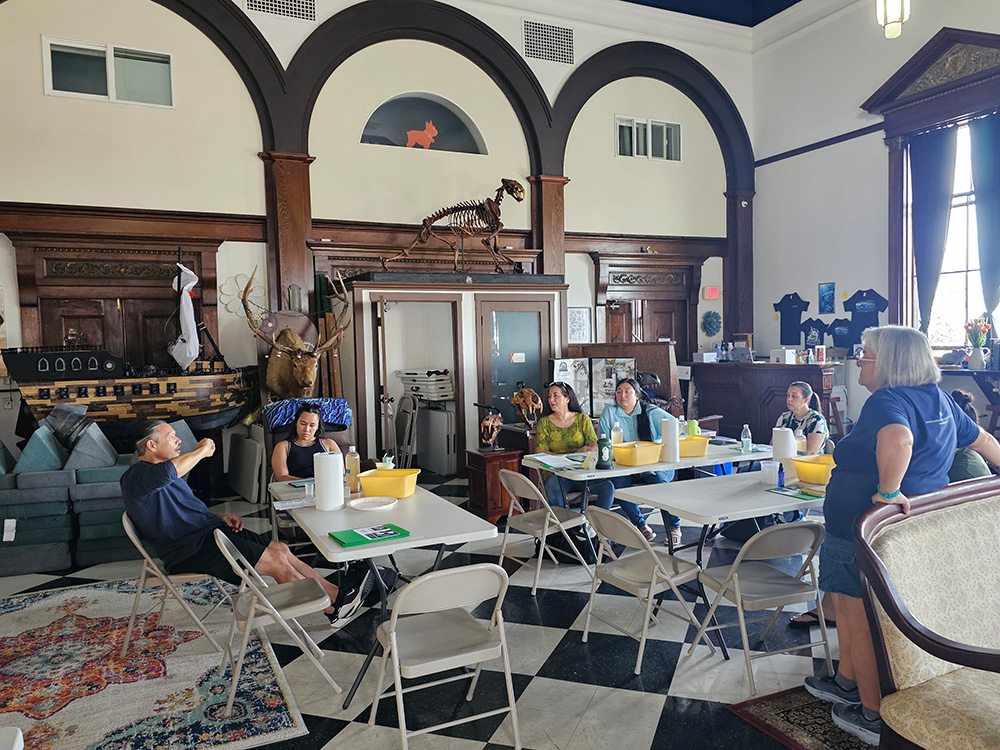
Another highlight of the visit was the teacher workshop I hosted with Dr. Pinner at the Hawai'i Science and Technology Museum, a beautiful community space in downtown Hilo. Two Water Guardians will actually be staying at the museum, so if you're in the area and would like to get your hands on the sensor (or if you would like us to bring a workshop or equipment to a museum in your area), please reach out.
Something rare happened while I was in Hilo — a tephra warning! I was hoping to see Kīlauea erupt while I was in town — and it did — but the wind blew the debris south instead of north as it usually does. Volcano National Park, as well as the nearby parts of the highway, were closed, and I could only watch the lava flow on livestream. I suppose I'll have to catch it next time.